Categories
Puppies

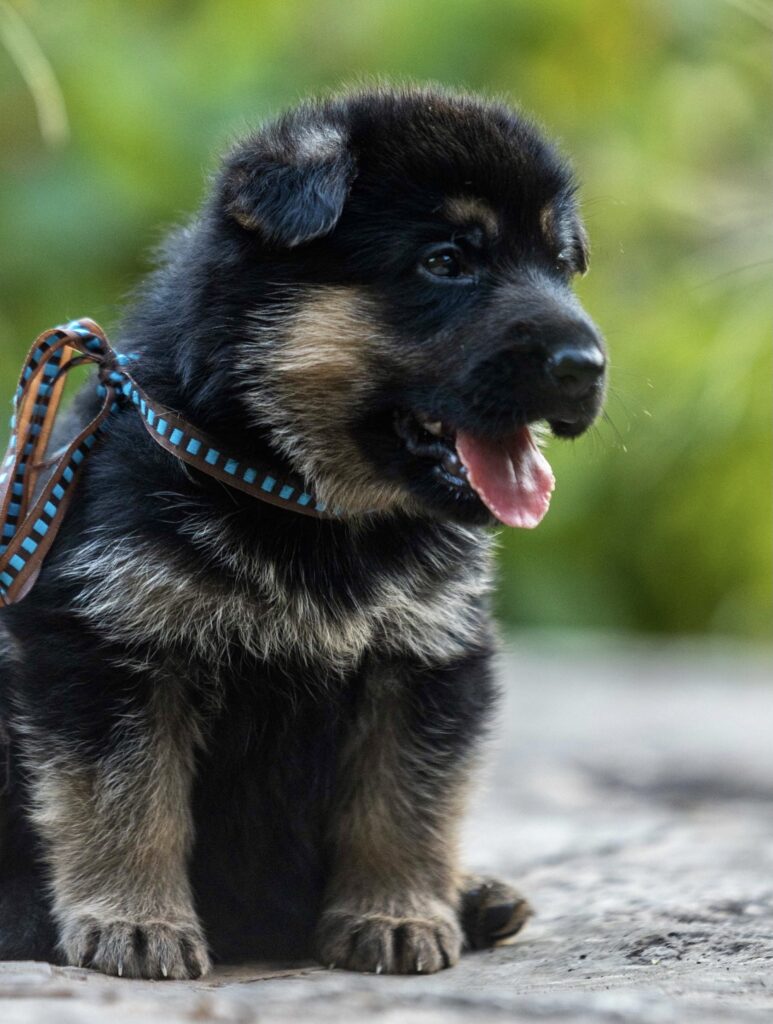
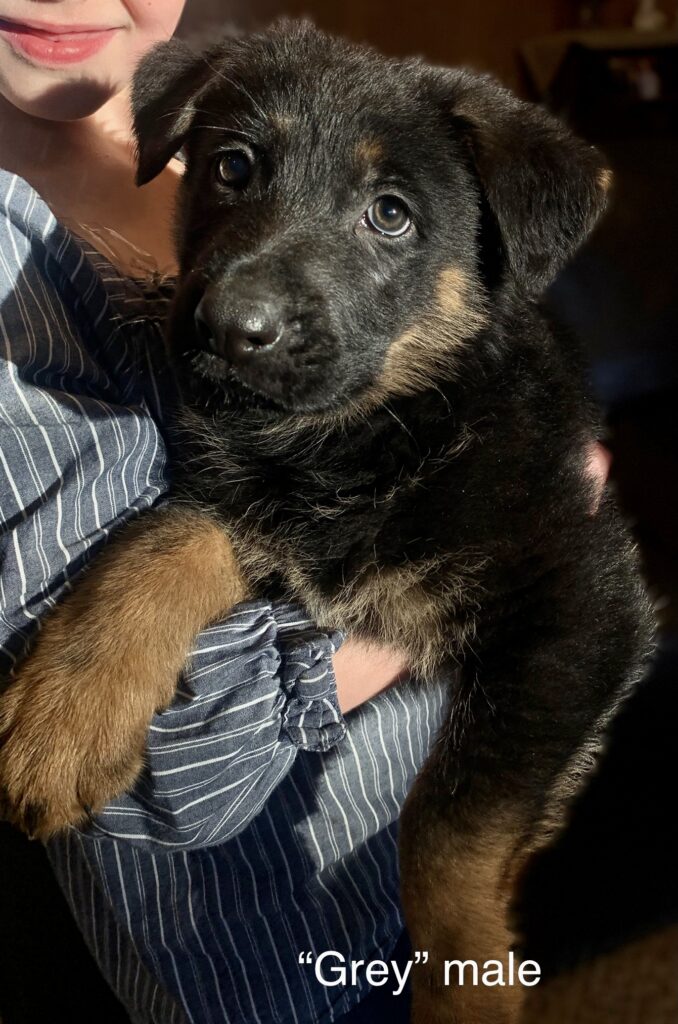
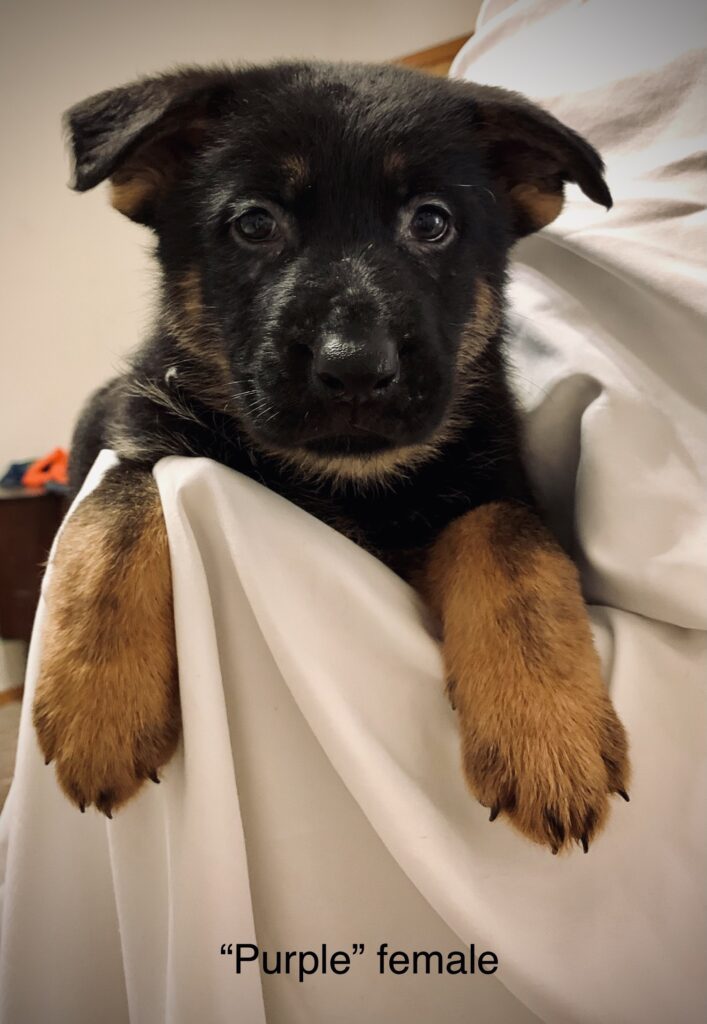
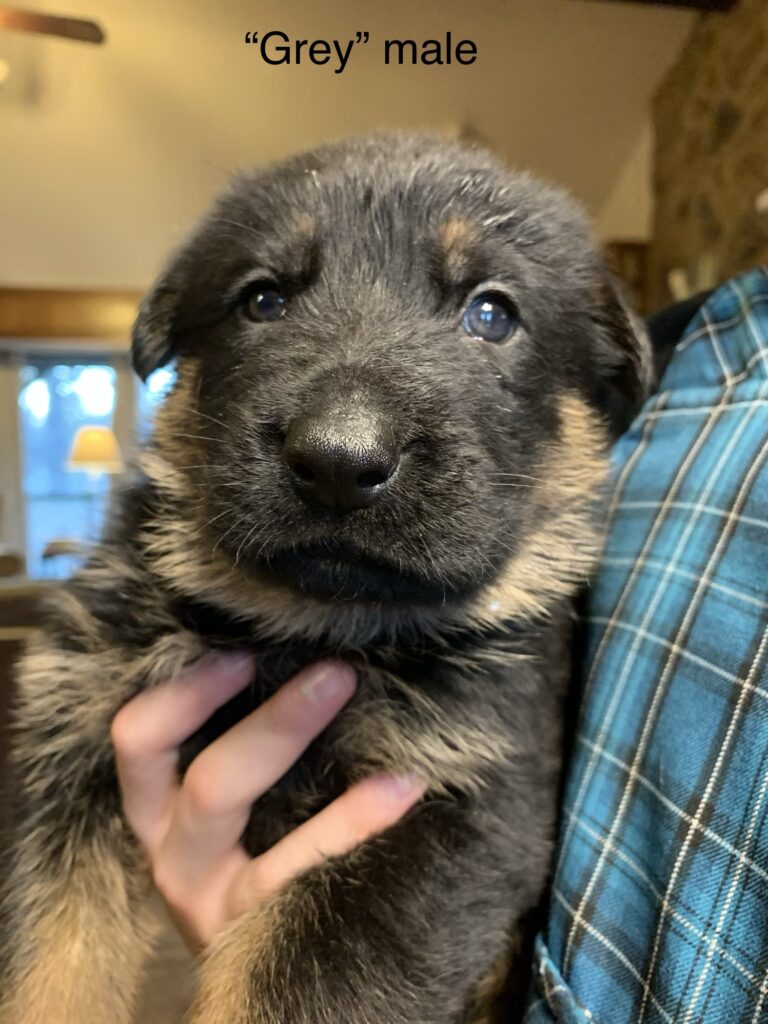
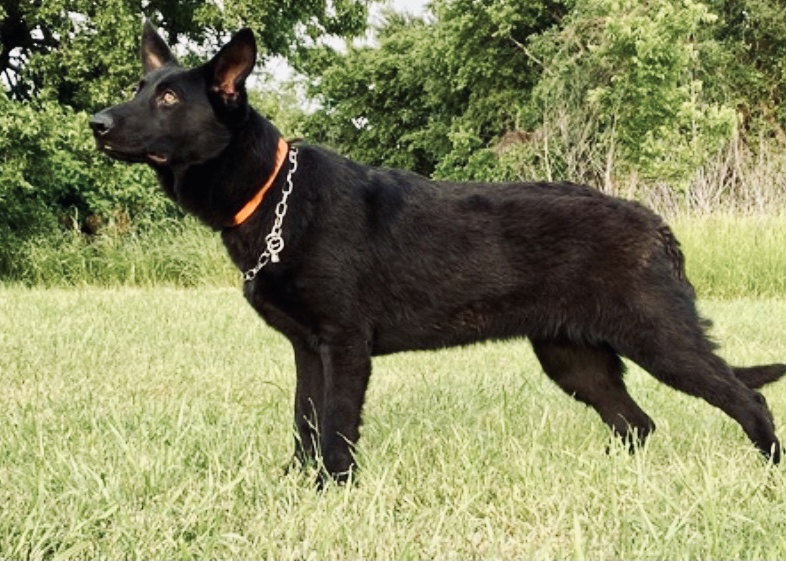
Beautiful 7 week GSD puppies

Aaron with German Shepherd pup

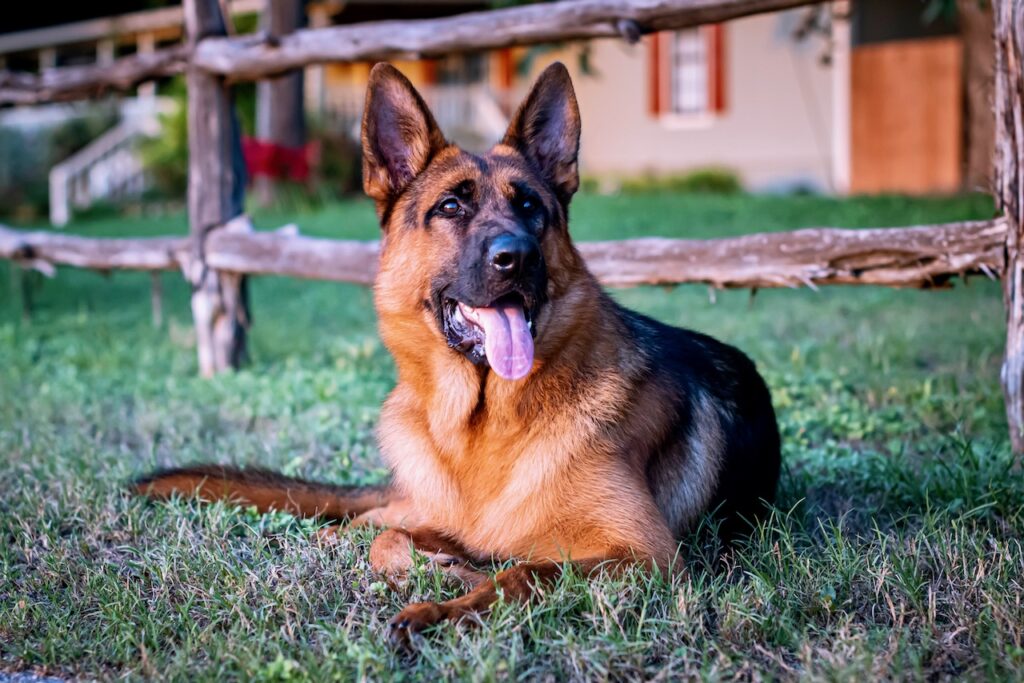
Duke, our West German stud from champion lines, sports a massive head and weighs over 100 pounds. He is sweet, fun-loving, and excellent with our five children. Chica hails from East German working lines; she is brilliant, motivated, and exceptionally trainable. Her loyalty to our family is unmatched. Combining these two will produce the perfect balance— sweet, larger frame dogs with strong drive and trainability.

Duke
Chica
Categories
Puppies

German Shepherd Puppies

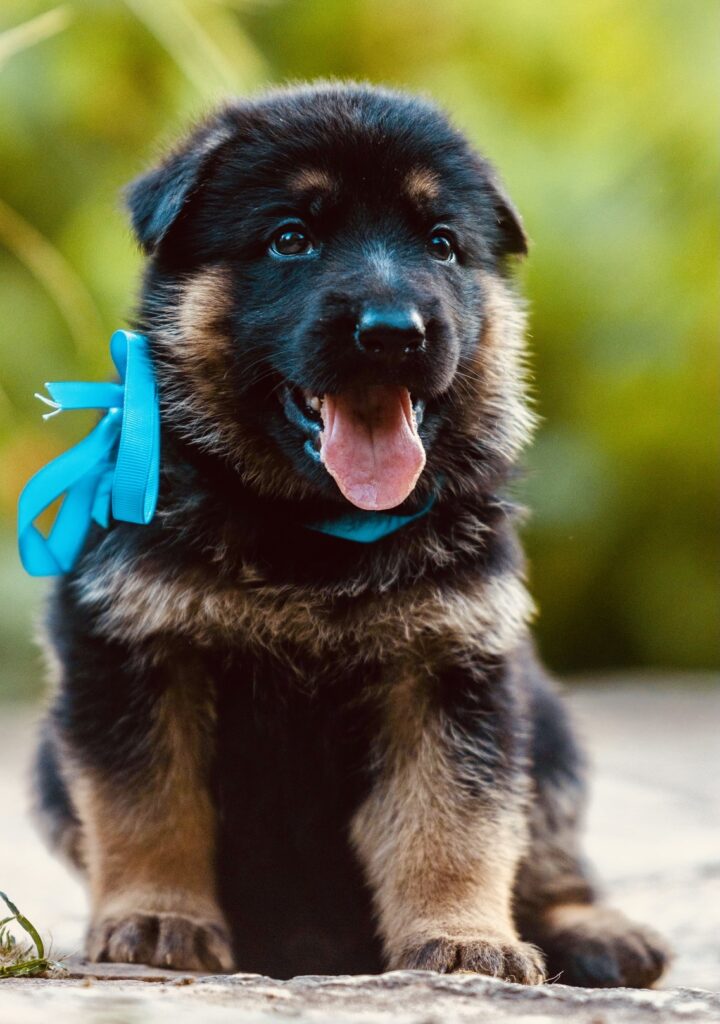
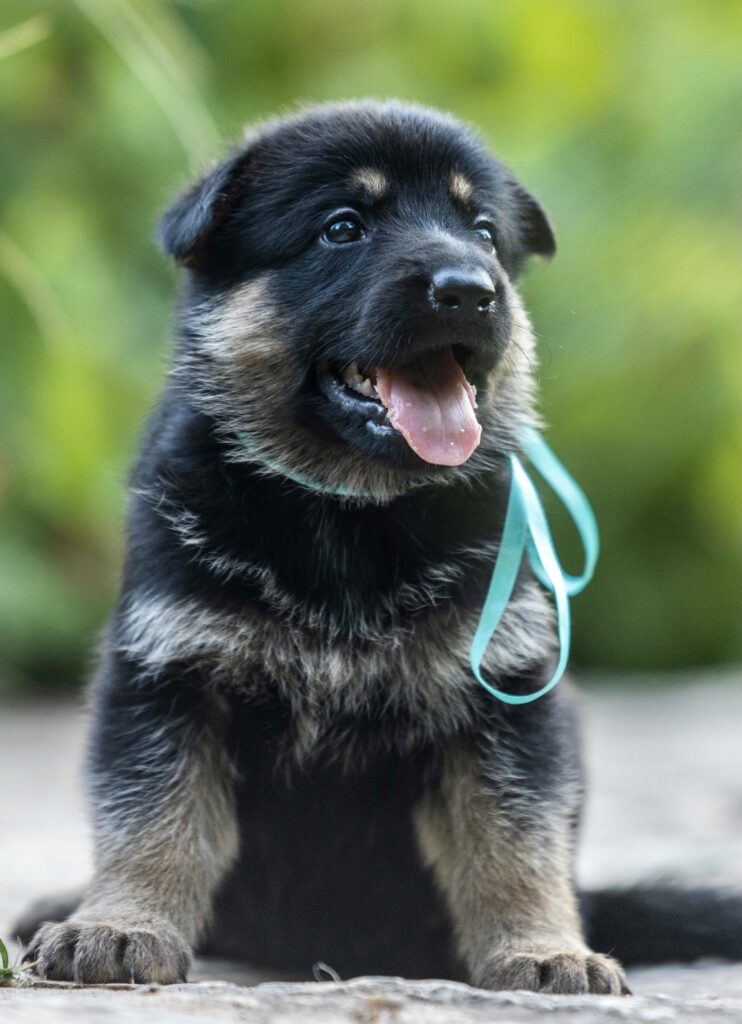
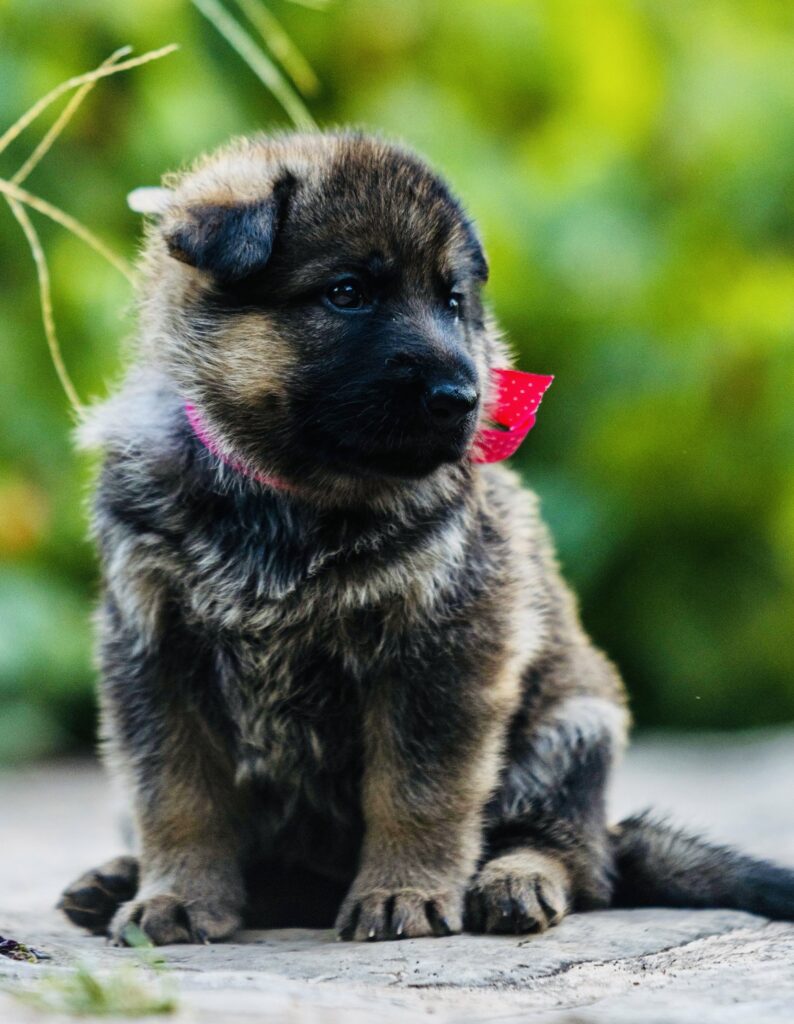
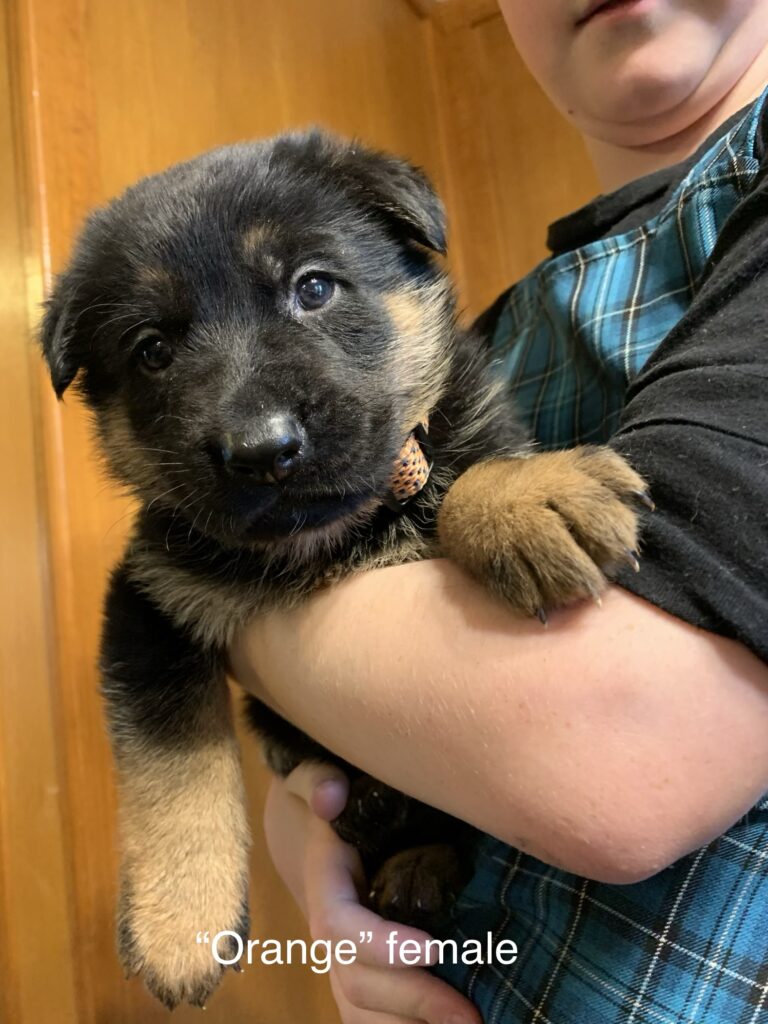
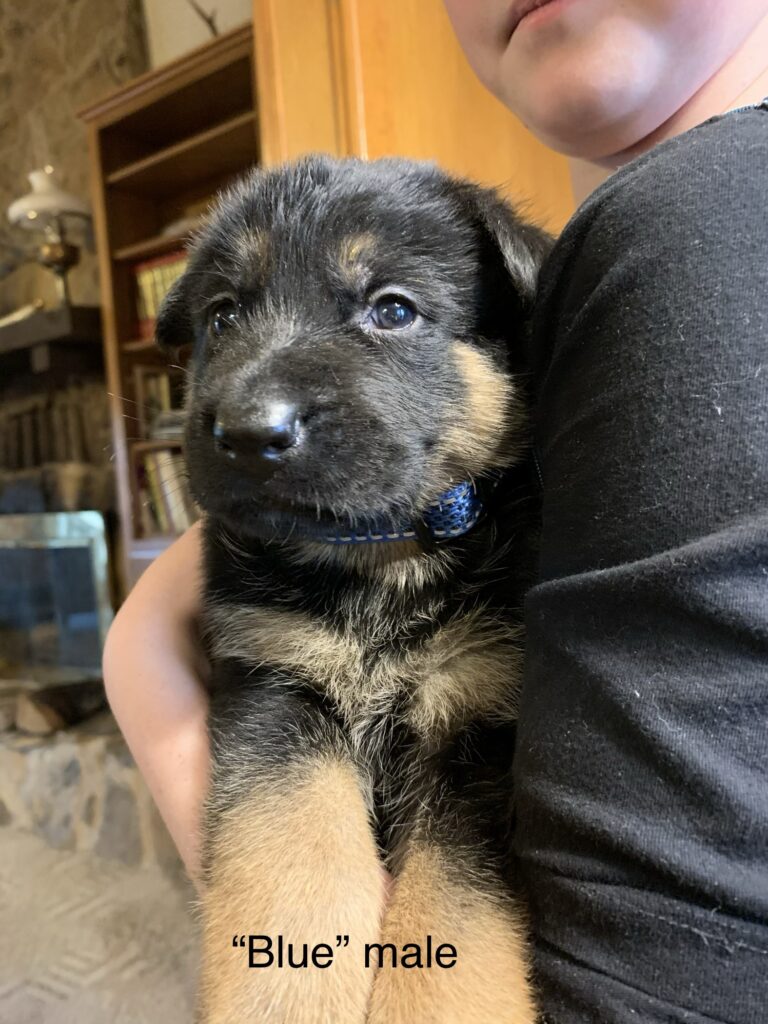
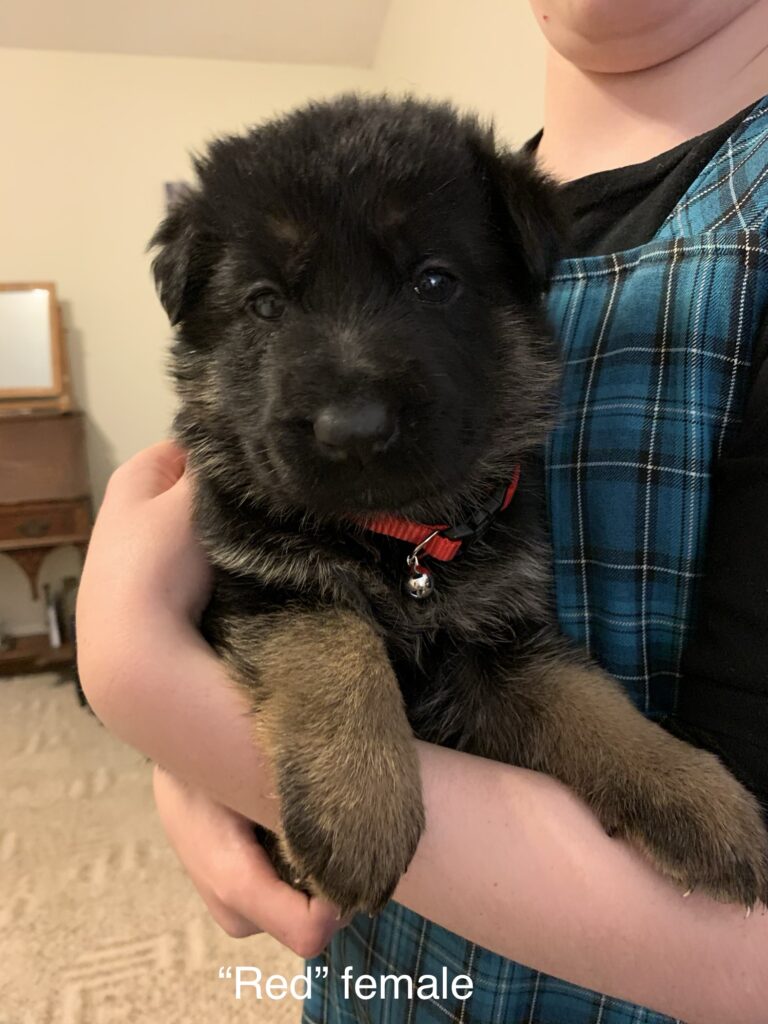
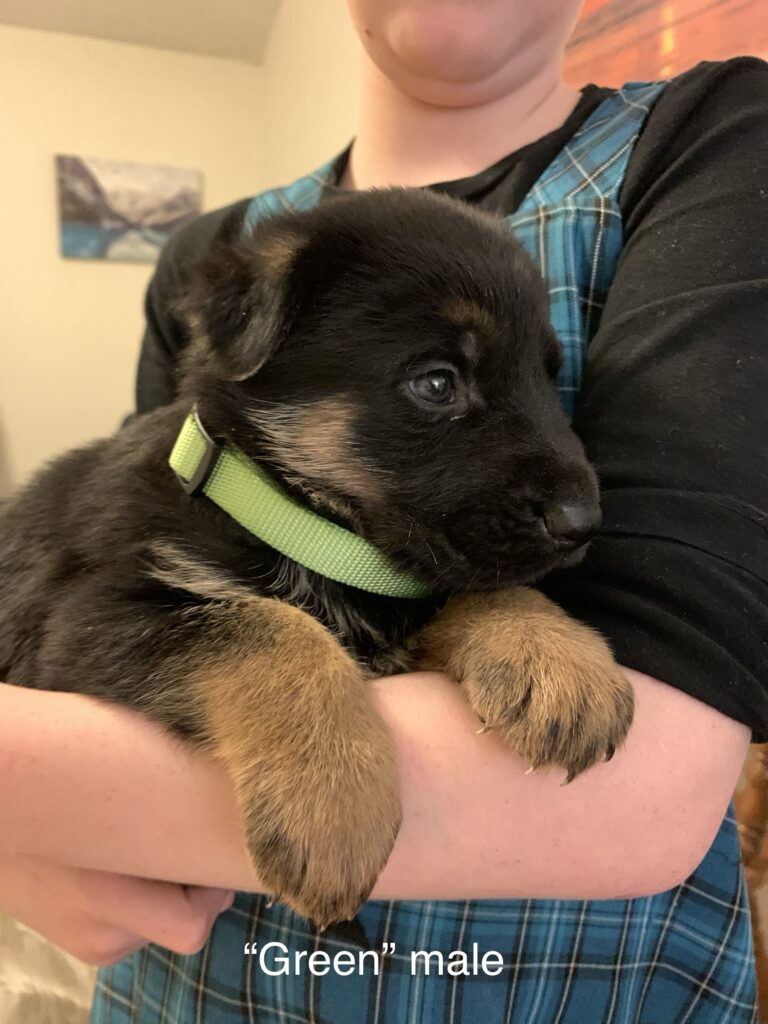
Eight adorable, healthy and energetic puppies will be ready for their new homes beginning August 25, 2021. We have sables, black and red, and black and tans. From west and east GSD lines, these dogs will blend the stature and temperament of the West with the East’s attentive, high motivation. $2500.

Call or text Rebekah: 254-829-9726

Categories
Puppies

Puppies Born

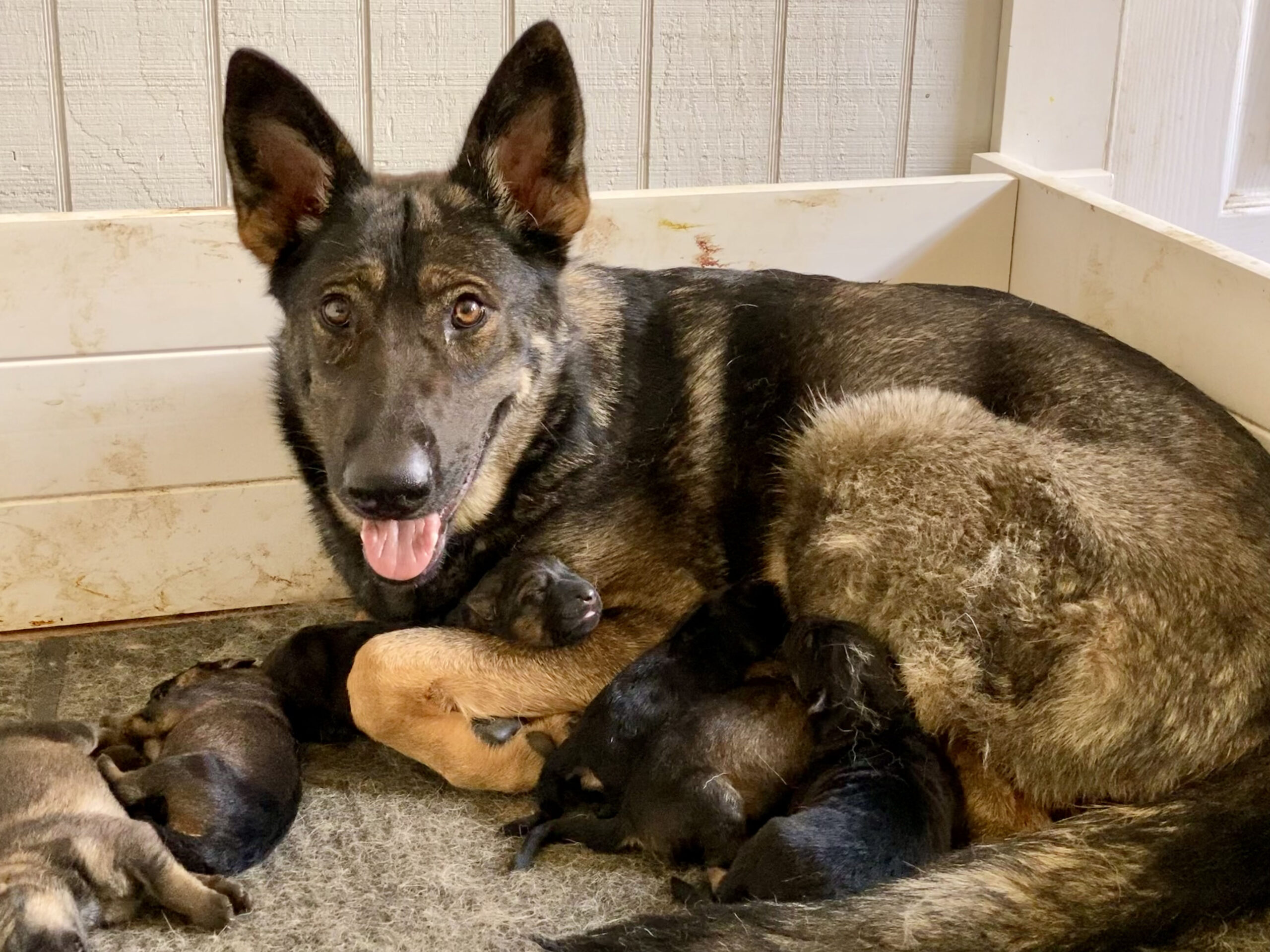
Chica, our Czech German Shepherd, gave birth to nine beautiful GSD pups — 5 males; 4 females. These pups will combine the energetic, engaging working lines with the large stature and mild temperament of the West German lines. Pups will be ready for their new homes August 24, 2021. To reserve, call: 254-829-9726

Chica with nine new puppies.
Duke, the Sire
Categories
Puppies

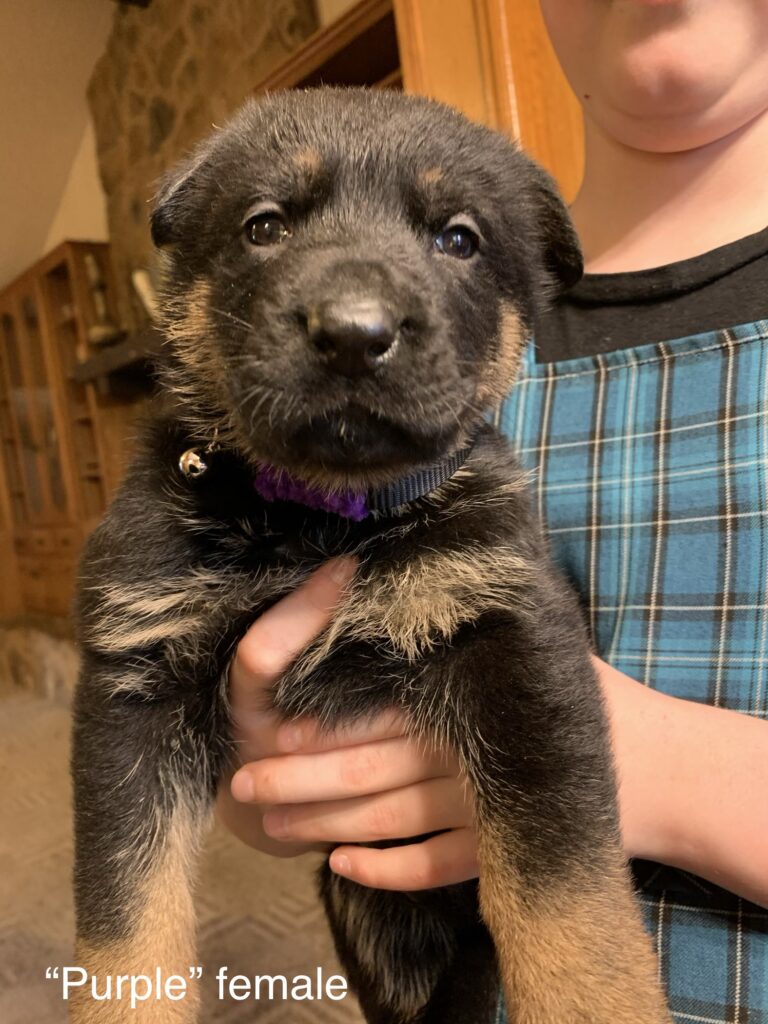
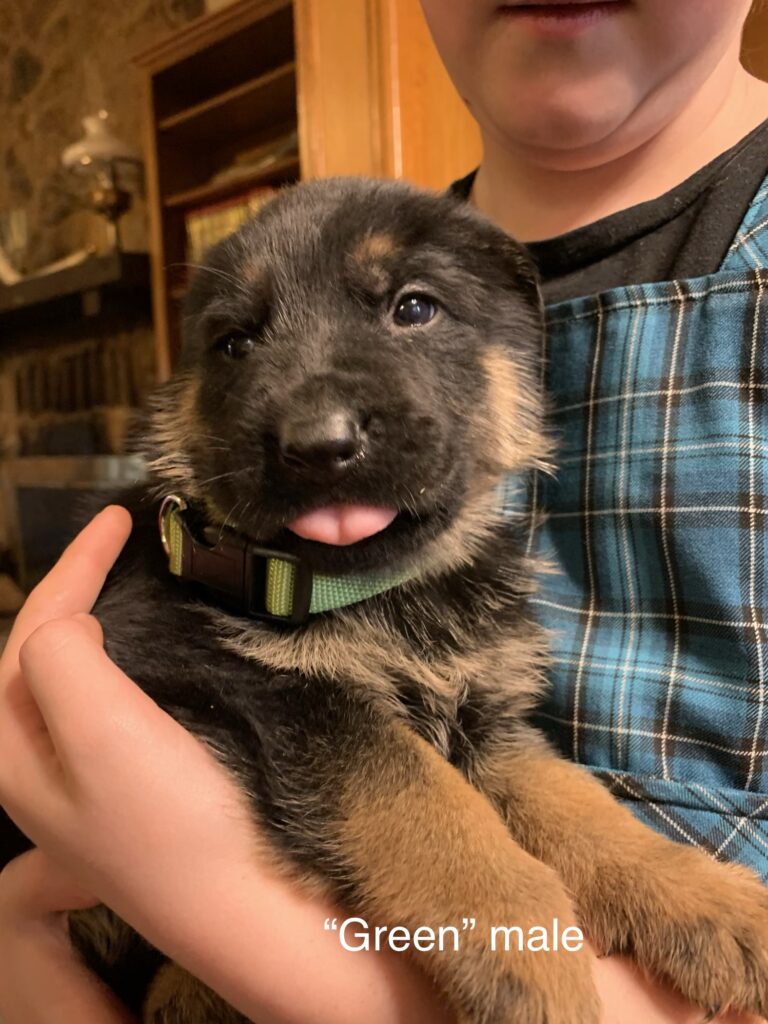
Last Two Pups

Here’s an update on the last two pups left—male and female!

If interested, call to place a deposit.

254–829-9726

Categories
Adult Dogs General Info Training

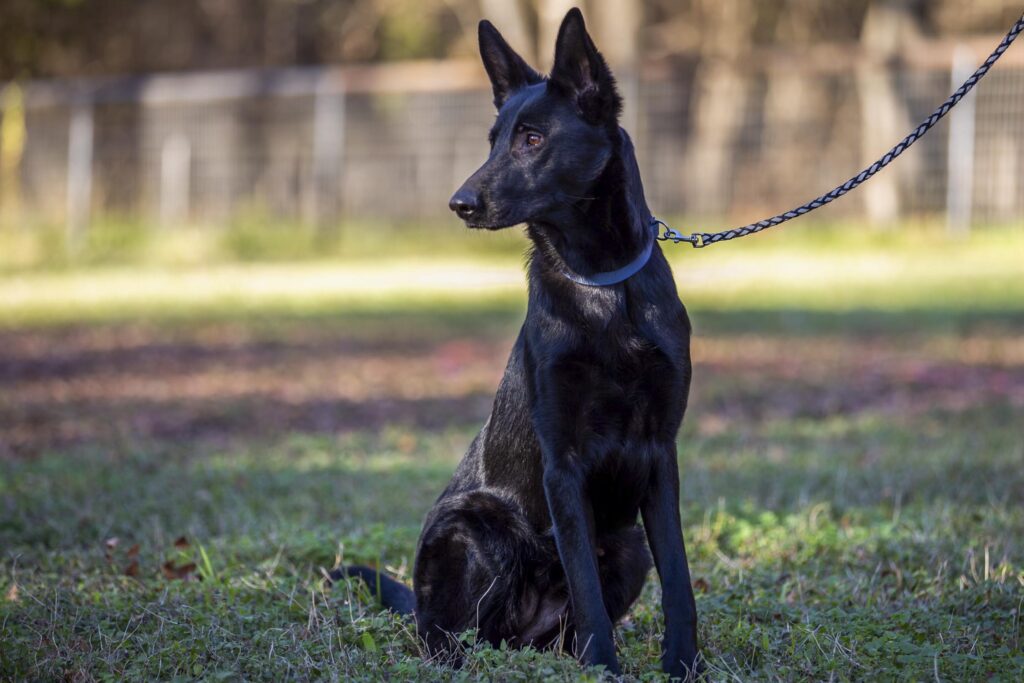
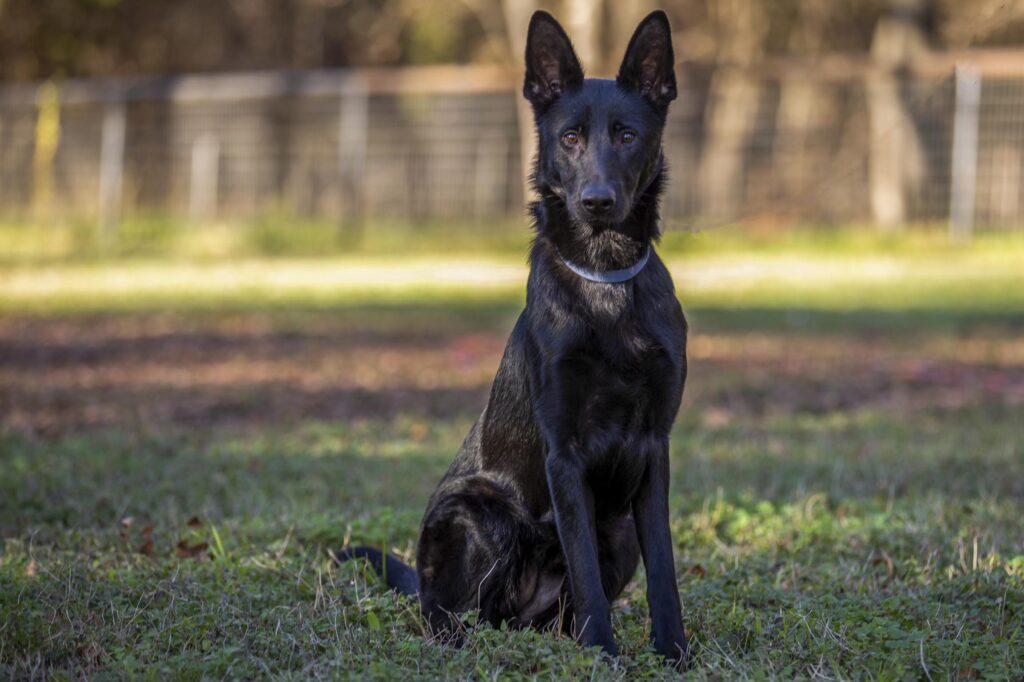
1-Year-Old Autumn

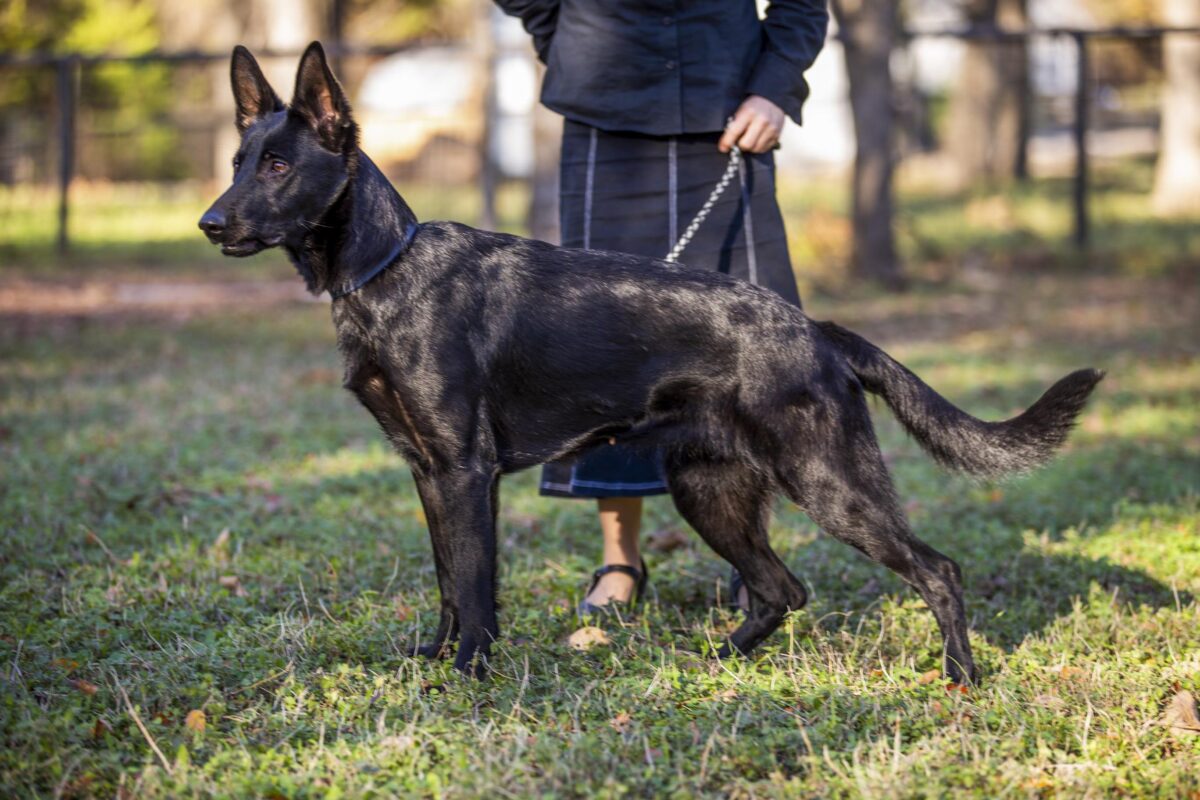
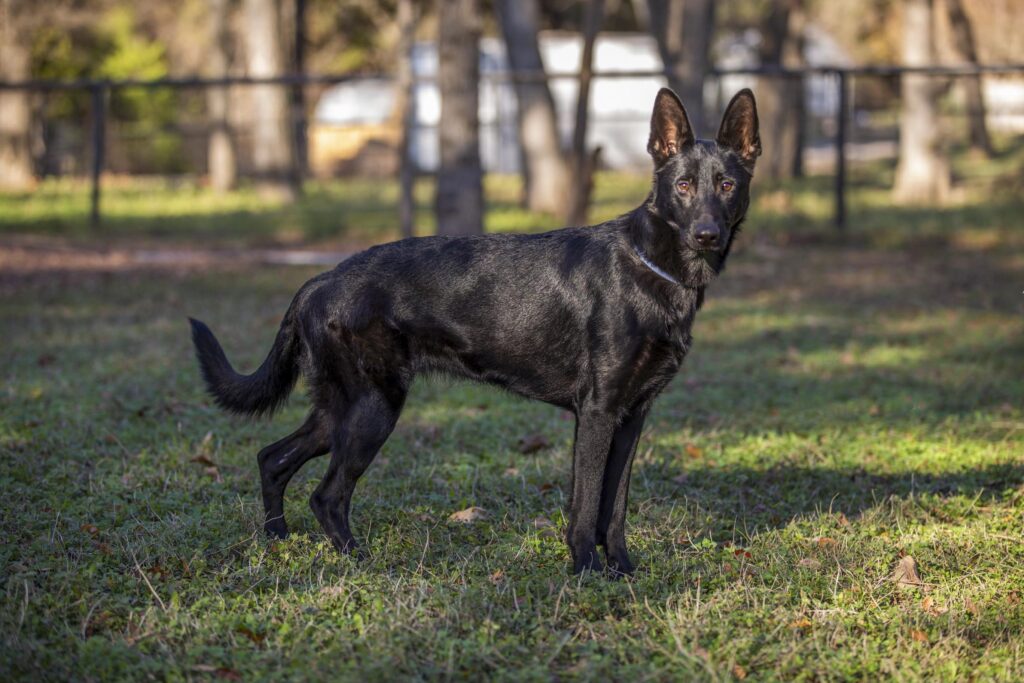
Autumn is a solid black AKC registered German Shepherd adult. She is crate and obedience trained, housebroke, and suitable for town or country living. She is a gentle dog, requiring gentle training and handling. If interested in a dog trained in all the basics, and past the puppy stage, ready to move into your home, please contact us. Rebekah: 254-829-9726

Categories
Puppies

New Puppy Pictures

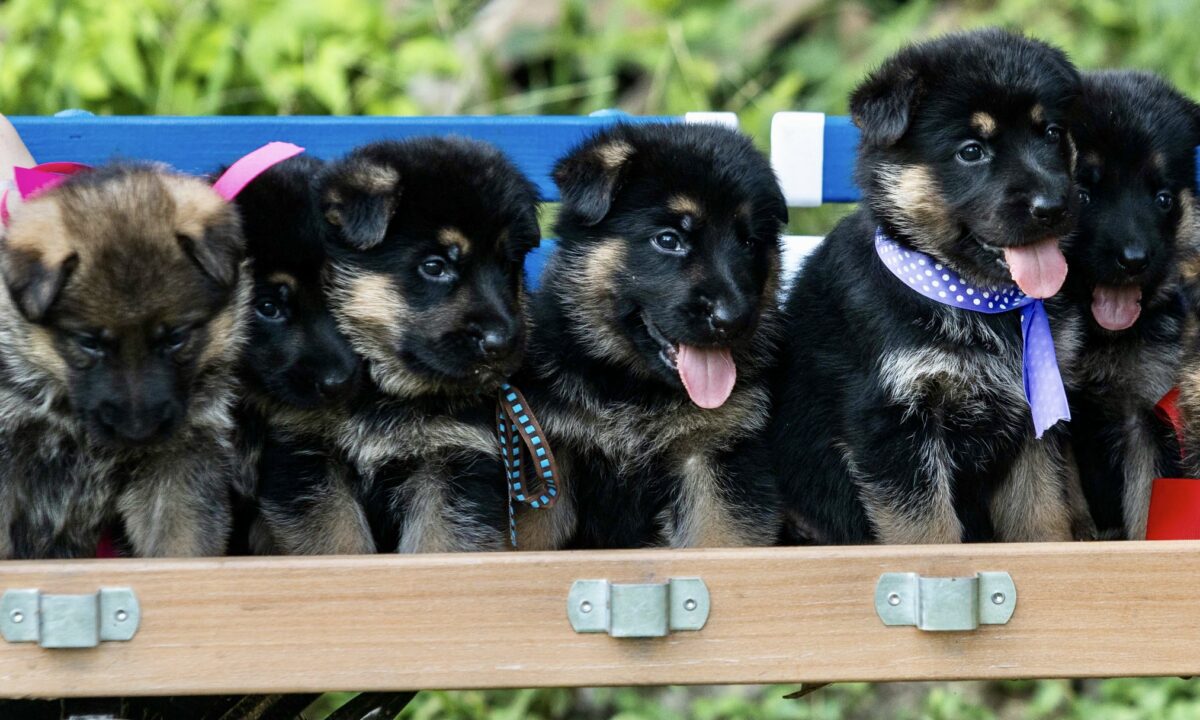
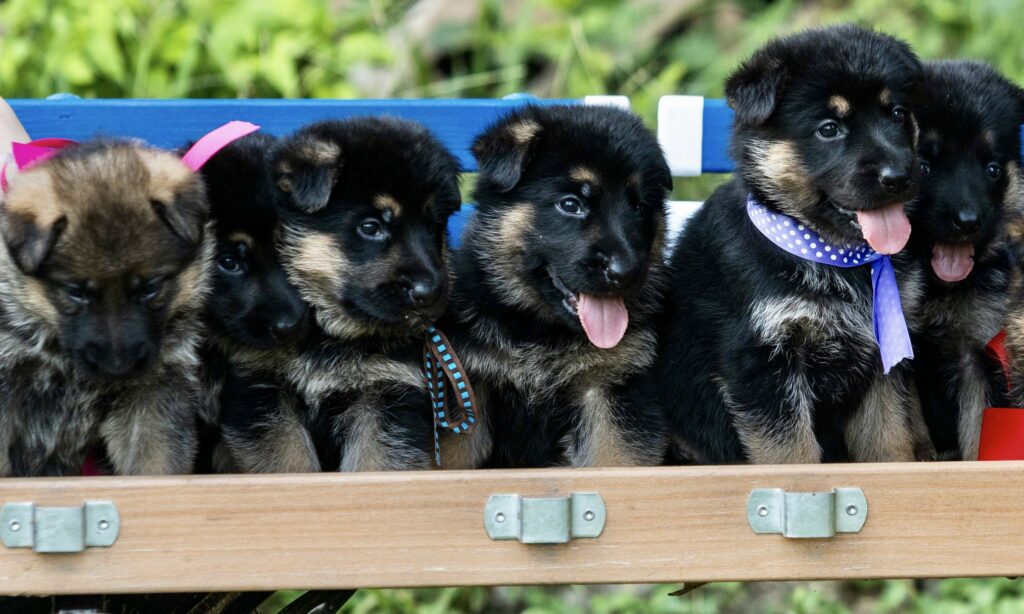
Here are seven German shepherd puppies at five weeks old. To get your name on the list, call Rebekah: 254-829-9726. Adoption: $2500.

Their personalities are already emerging. These pups will be ready for their new homes in three weeks!

Categories
Training

Think Like a Puppy

Dogs learn differently. The biggest mistake I see people make when attempting to train a dog is to impute to the animal their own human feelings, perspective and intelligence. It’s natural for us to think other creatures relate to the world like we do, but they don’t. Admittedly, some of the cutest pictures online seem to show canine behavior that resembles humans. Yet, the truth is, your dog is not a person. Let’s focus for a little bit on how a dog learns a command.

Not like a person… You have a language made up of sounds that comprise words, and those words have meaning in and of themselves. When you hear the word “come,” you know what that word means; you picture that word in action, you may even recall a story or experience that highlights the meaning of that word. Yet, your dog does not have a language; he will never have a vocabulary. The word “come” will simply be a disconnected sound ringing in his ears when his body happens to be moving through space toward you. 

For people, words have intrinsic and theoretical meaning. For dogs, words will only have associative “meaning.” What do I mean by this? If I ask you what the word “come” means, you can describe that word’s meaning, unlike a dog. Yet, you also experience associative meaning. Have you ever encountered a smell that flooded your mind with memories? Or have you ever heard a childhood tune that brought back a time in feeling to you from your past? 

When I smell hey and horses, I remember my childhood in Colorado. This doesn’t mean that the hay and horses have some dictionary meaning spelling out the country’s geographical region called “Colorado.” Instead, a conscious behavior was associated and connected to a subconscious stimulation–a smell, tune, etc.. The other action has no actual connection to the stimuli; nonetheless, one brings back the other because they coincided.

Similarly, your dog is going to learn that pleasing you puts a pleasant taste in his mouth, and he’s going to realize that when he’s running in your direction, an utterly unintelligible sound is echoing in his ears, “come!” “come!” 

Why is this important? If you assume that your dog cognates words as you do, you’re going to use those words to try to force his behavior prematurely. In short, you shouldn’t use a command as a command until your dog has completely habituated the combination of the action with the crazy human sound. In the early stages of training, you should make up your mind to give NO command that you’re not CERTAIN he will obey. You must figure out how to induce the behavior; once the action is in motion, sound out the command. If you do this consistently, the animal will start associating the behavior with the command, followed by a reward. In time, you will be able to use the sound to induce the action, but NOT at the beginning!

The biggest mistake amateurs make is forcefully insisting on commands before the dog has entirely made the association between the behavior and sound. Challenge yourself to figure out how to trigger your dog’s desired behavior. Once he’s doing it, call out that command. And repeat that process over and over and over. Only when you’re sure he’s making the association should you carefully try to issue the order, combined with body language, and expect your dog to respond accordingly. Reward him exuberantly with praise and a treat.

Categories
Puppies

New Puppies!

We are excited to announce that our solid black female has seven puppies on the ground from our gorgeous West German male, Duke!

We expect the pups end up blanket black and red–featuring their sire’s distinctive auburn accents. Adoption fee: $2,500
Call Rebekah: 254-829-9726

FENDY, the bitch.
Categories
General Info

West vs. East Lines Explained

The close of World War II divided Germany into “West” and “East.” The Soviet union control the east, and the allied forces the west. The Soviets soon erected a massive barrier, known as the Berlin Wall, preventing travel back-and-forth between the corridors. This wall separated families; broke off contact between loved ones, as starkly different government philosophies played out on either side.
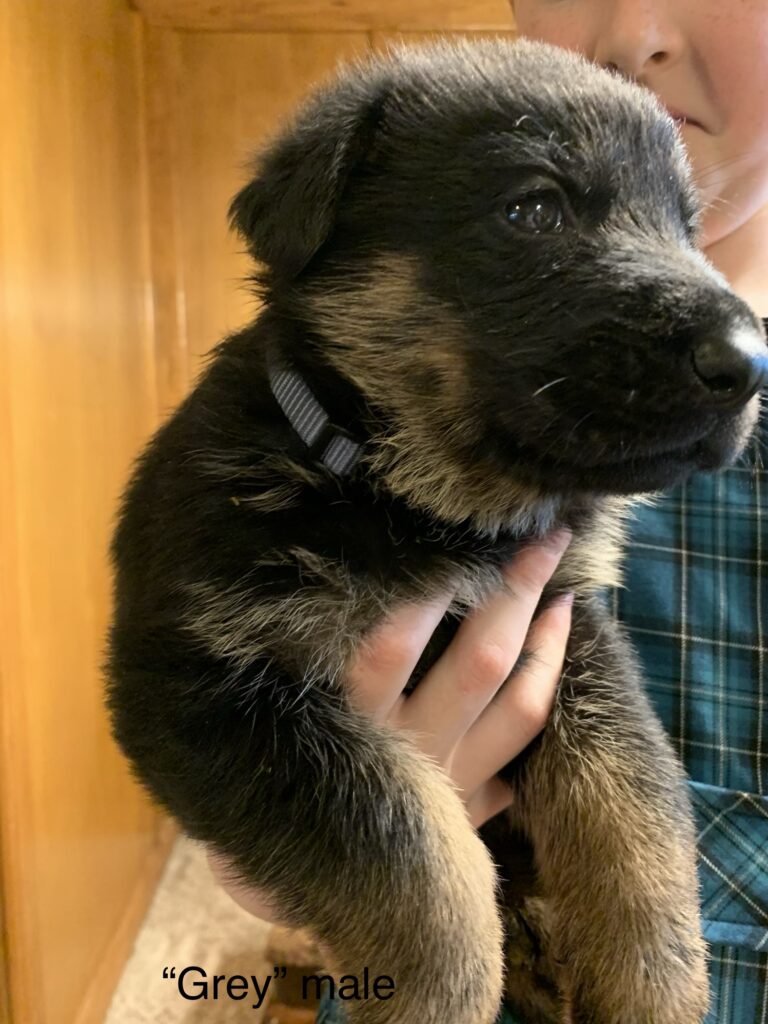
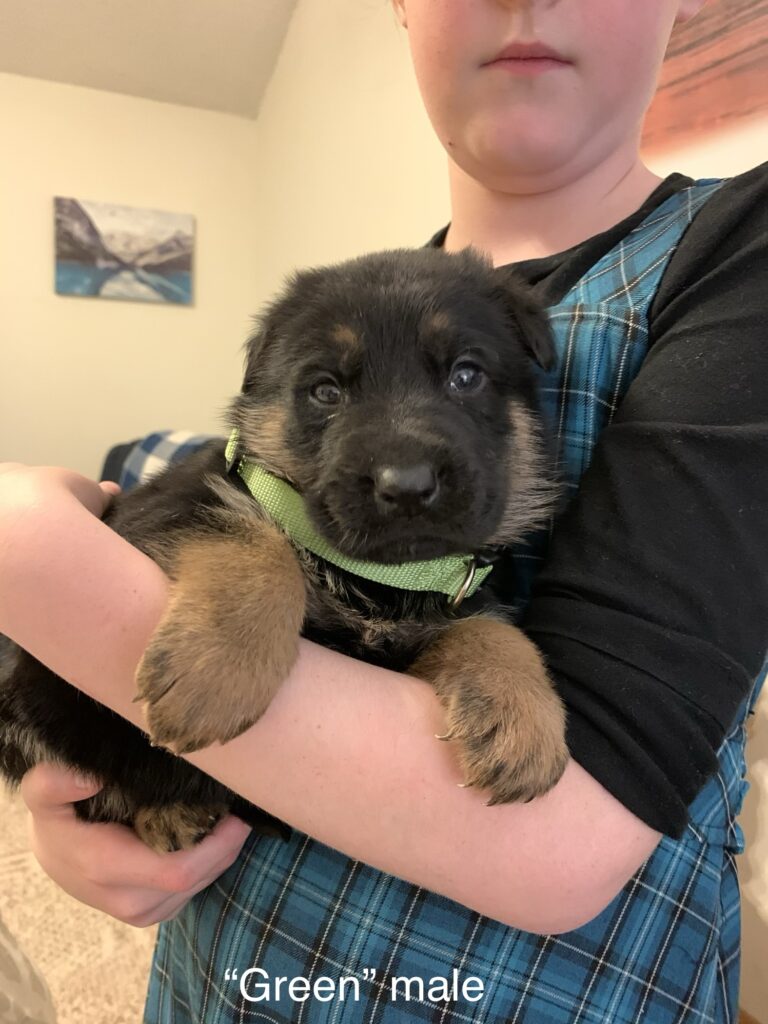
German Shepherds had attracted the attention of the world toward the close of World War I. German forces again employed this dog of unmatched intelligence and stamina during World War II. Despite the unfavorable connotations surrounding their service, the breed earned soldiers’ respect on both sides of the conflict. When the war divided 1940s Germany, two very distinct approaches to the breed played out. East Germany raised Shepherds strictly devoted to government and police work. The west bred more for beauty, temperament, intelligence, and impressive stature. To this day, lines developed under the GDR have a powerful prey drive, inexhaustible stamina and are generally more suited to work than a sedentary life around the house. East German Shepherds make for excellent police dogs, search and rescue, protection dogs, agility acrobats, and service dogs of various kinds. They can be a bit much for an inexperienced trainer/owner to handle because of their increased intensity.

The West German lines also developed under exacting standards. To this day, a dog cannot breed who has not first passed the Sieger standards, including assessing conformation and size, obedience, intelligence, and working instincts. The West German Shepherd is far and away, a superior breed to the American show dog. (Because of the long-term joint complications and related health issues, we have no interest in exaggerating the natural slope in the German Shepherd breed. We tend to favor the straighter backed dogs.)

So, while the west German Shepherd is a fabulous dog in its own right, making the perfect companion for many homes, we believe the best, most balanced dog is a combination of east and west. We pursue the Working Line’s intelligence and eagerness, combined with the amiable temperament, beauty, and size of the west German show line. The result: a perfectly balanced dog of outstanding temperament and trainability—suited for home and field alike.